The Graveyard
The Graveyard at Thundridge Old Church
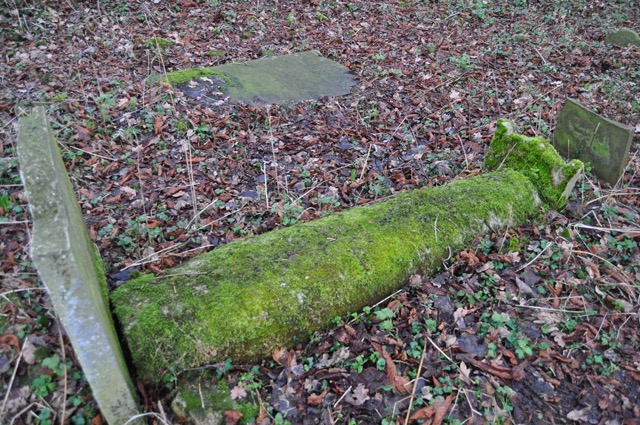
The graveyard, (now “closed”) measures some 60m north-south by 40m east-west and contains numerous gravepits, many marked with stone headstones. Some of the graves are thought likely to date to the Medieval period, with further Medieval deposits preserved in the intervening areas.
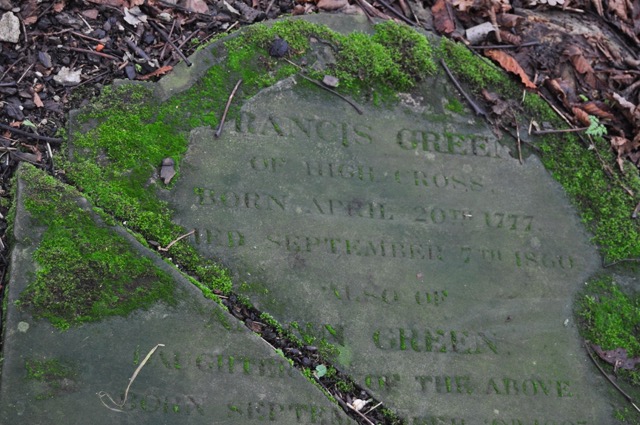
In the last decades, many of the Old Church’s gravestones have deteriorated and are increasingly illegible. Three stones dating to the 1760’s were removed to the care of Ware museum and are still visible there
Thankfully the inscriptions have been surveyed and recorded by generations of historians including J E Cussans in 1870, W E Gerish in 1907, Alfred C Pagan in 1979 and the Thundridge and High Cross Society in 1993. In 2010, Hertfordshire Family History Society compiled these records to produce ‘Hertfordshire Monumental Inscriptions No 95; The Parish Churches of St Mary, Thundridge including St Mary, Thundridge Old Church and St John, High Cross’.
The crypt of the Old Church remains the resting place of members of the Gardiners of Thundridgebury. Three headstones show the impact of the pre-antibiotic era on child mortality; three girls died between November and Christmas Day 1802. However, the myth about ‘Cold Christmas Church’ being so named because of a mass grave of frozen children is doubly wrong. Firstly, church records contain no unusual patterns of numerous children dying at any time in history. In fact, Thundridge Parish’s death rate, even during plague years and during outbreaks of childhood diseases, was lower than that at Ware. There is also no evidence, physical or documented, of mass graves of any kind located in the churchyard. Secondly, this church was never called ‘Cold Christmas Church’, Cold Christmas simply being an unexceptional hamlet of a few dwellings a mile away.
The burial ground was enclosed by a 17th or 18th century brick wall, which stood 8 feet high until the late 1940’s, but now is largely cleared.