Around 6,000 moated sites are known in England. They consist of wide ditches, often or seasonally water-filled, partly or completely enclosing one or more islands of dry ground on which stood domestic or religious buildings. In some cases the islands were used for horticulture. The majority of moated sites served as prestigious aristocratic and seigneurial residences with the provision of a moat intended as a status symbol rather than a practical military defence. The peak period during which moated sites were built was between about 1250 and 1350 and by far the greatest concentration lies in central and eastern parts of England. However, moated sites were built throughout the medieval period, are widely scattered throughout England and exhibit a high level of diversity in their forms and sizes. They form a significant class of medieval monument and are important for the understanding of the distribution of wealth and status in the countryside. Many examples provide conditions favourable to the survival of organic remains.
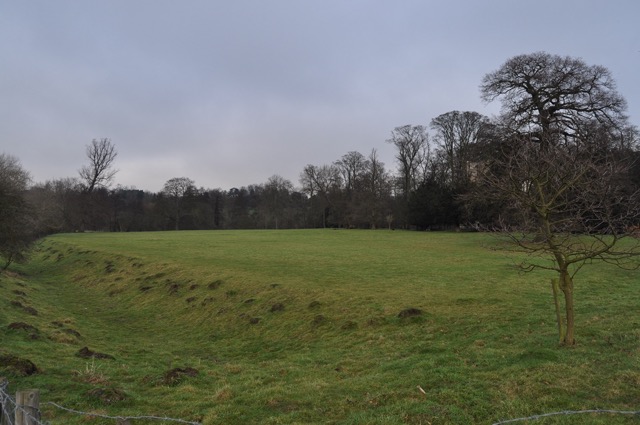
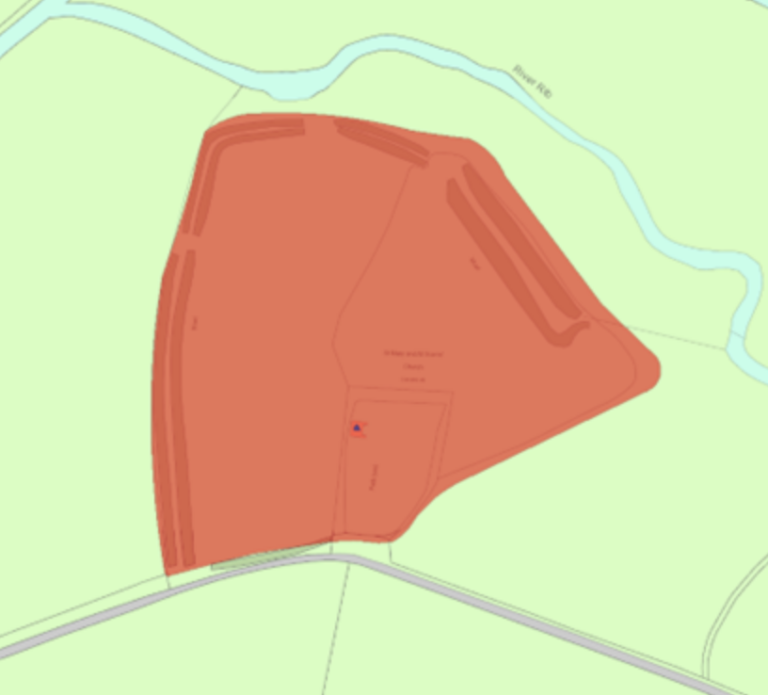
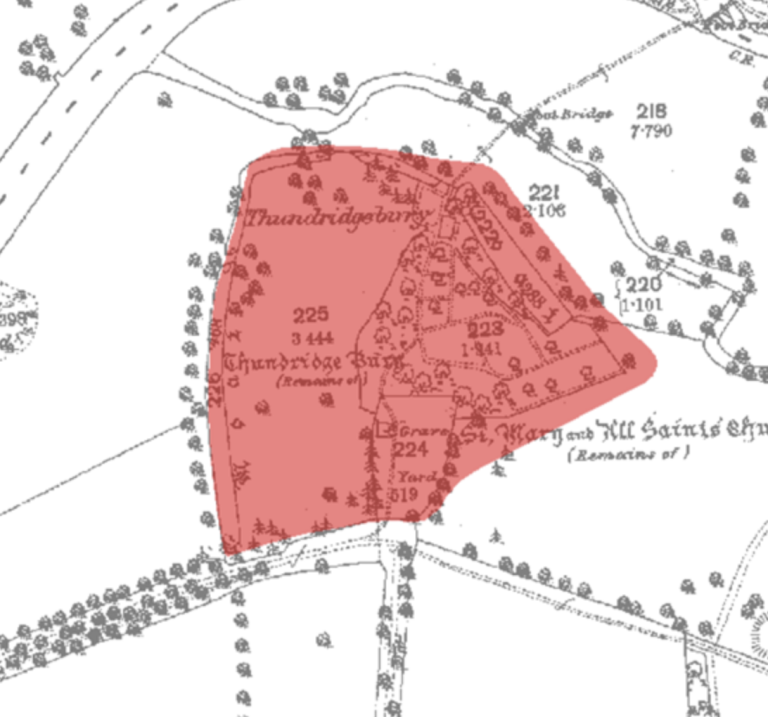
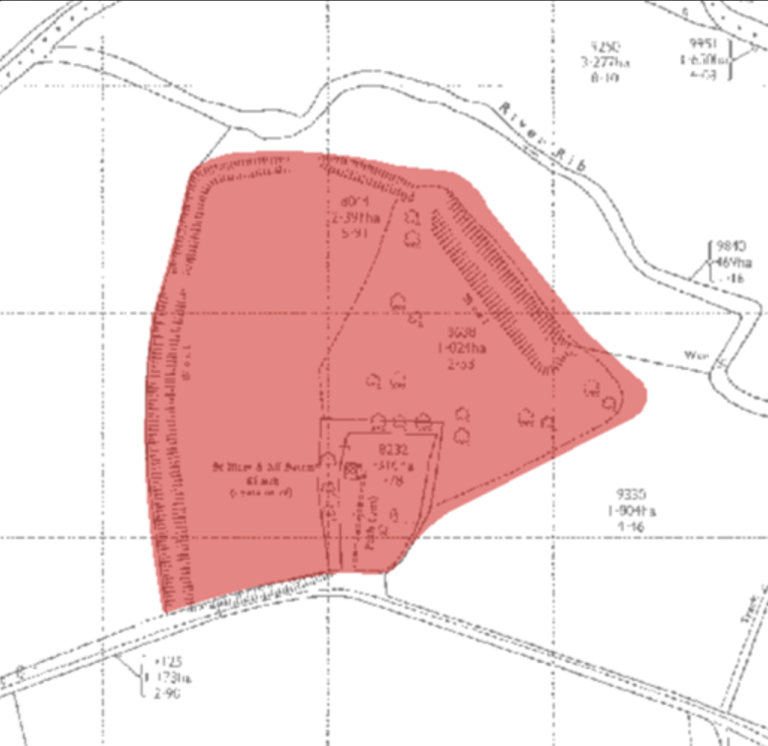
Thundridgebury moated enclosure is unusual for its extensive size, covering up to 2.8ha, and for the range of features it surrounds. It is “D” shaped with external dimensions of approximately 195m north-south by 200m east-west. The surrounding dry moat varies in width between 7m and 20m, but part of the southern arm and the south-east corner is obscured. Three causewayed breaks in the northern arm of the moat are thought to be modern.
The interior of the enclosure, now in the wooded area to the North of the churchyard, contains the ruined remains of Thundridgebury House, believed to date from the 16th century. A series of brick foundations indicate the location of the house and outbuildings which were demolished in 1811. Immediately to the south of the house are the remains of St. Mary and All Saints’ Church.
The moated enclosure was scheduled in 1990 as Historic England List Entry Number 1012268.