About the Church
The Church of St Mary and All Saints'
The Grade II* listed tower of St. Mary and All Saints’ Church (also known as Thundridge Old Church) is a preeminent cultural and historic keystone building in the history of the local area.
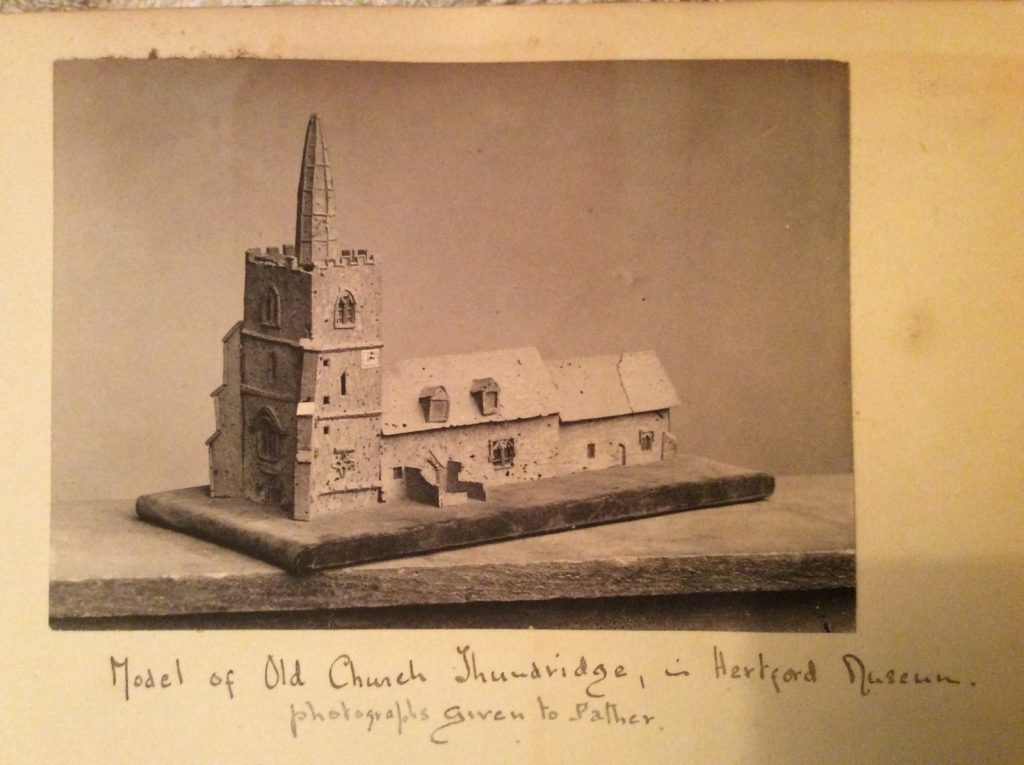
The Old Church today consists of a ruined 15th-century church tower set in a disused graveyard with graves that date to the medieval period. The tower contains 12th-14th-century features
It is the last visible evidence of continuous occupation for over 1,000 years of a now remote location in the Rib Valley, within a landscape that has remarkably not been disturbed or archeologically investigated and has rich historic significance and evidential potential.
The Old Church is a direct link to and evokes and illustrates significant local historic events and individual histories such as the establishment of the first Turnpike and inspiration for the abolition of slavery movement. It is an iconic eye-catching feature and ‘borrowed view’ from the Capability Brown-designed landscape park of Youngsbury.
It is a flagship destination within the Rib Valley as a green space for the physical, mental, and spiritual good health of the local community and special interest groups from far afield, ever more important after the planned substantial development to the North of Ware.

Significant Features
The church has a surviving early Norman door, and known alterations in the 14th century and again in the 15th century when the extant three-stage West tower was added. A 14th-century window also survives. The nave and chancel of the church were demolished in 1853 and the above-mentioned historic features were reset into the east wall of the tower. Archaeology in the immediate area suggests there is potential for earlier occupation of the site.
The churchyard is located in a medieval moated enclosure unusual both in its size and for the range of features within including a manorial complex including the remains of 16th-century Thundridgebury House, which was demolished in 1811.
On the south face of the tower is a carving containing a Pelham buckle, a symbol granted to John de Pelham in recognition of Pelham’s role in the capture of the French King Jean II at Poitiers in 1356.